
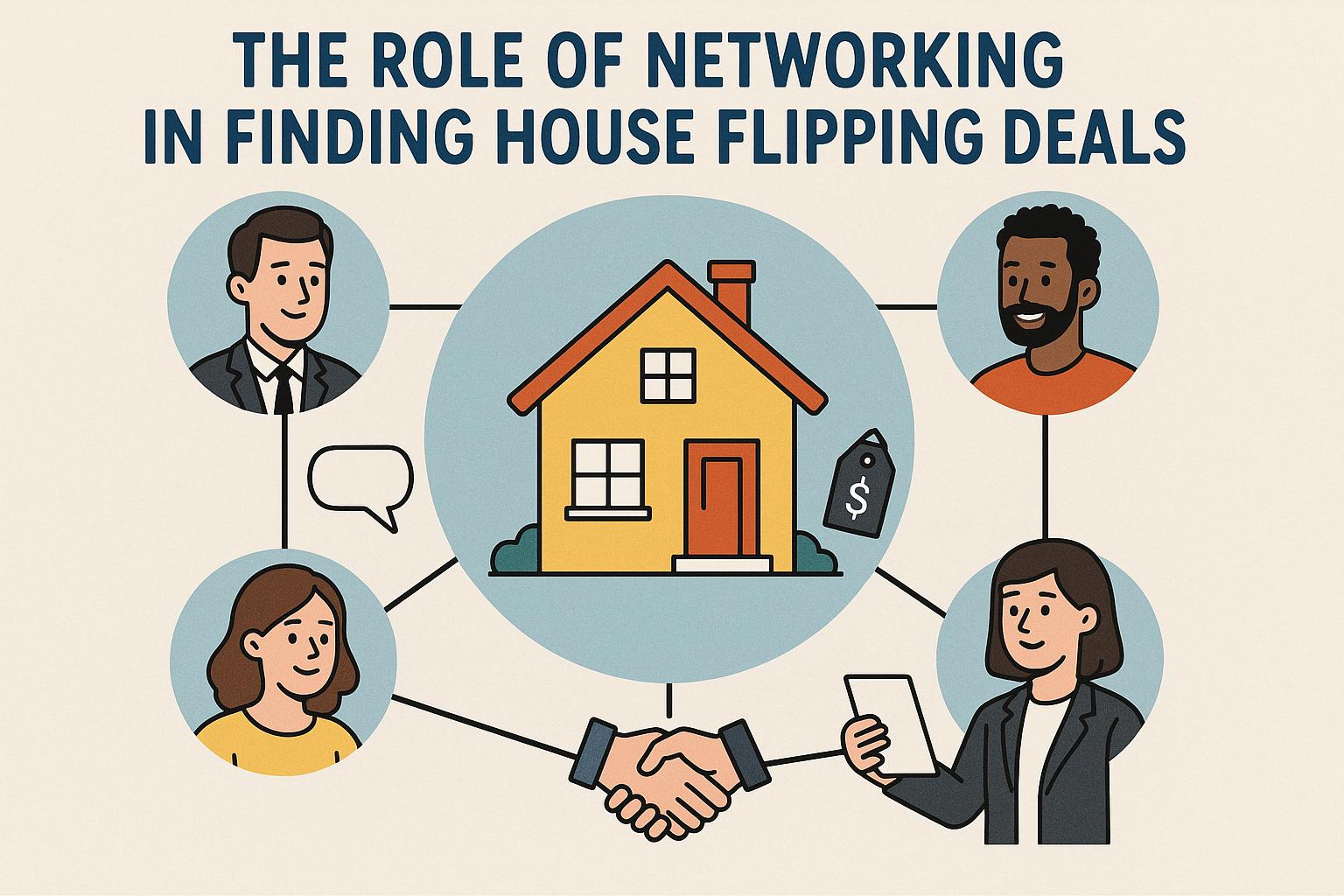
Networking plays a crucial role in the real estate industry, especially in the niche of house flipping. Establishing connections and building relationships can help investors find lucrative deals that might not be accessible through traditional routes. While market analysis and financial planning are essential components of successful house flipping, networking can often be the key that opens doors to the most profitable opportunities.
In the context of real estate, networking involves building relationships with various stakeholders such as real estate agents, contractors, wholesalers, and other investors. These connections are beneficial for gathering information, receiving recommendations, and even forming partnerships. Networking allows investors to gain insider knowledge about market trends, available properties, and investment strategies.
Real estate agents often have access to properties before they hit the market. By establishing a strong relationship with agents, investors can gain early insights into potential deals. Agents can provide information about distressed properties, foreclosures, or homes available at discounts, all of which are ideal for flipping. Real estate agents are integral to the networking process as they serve as intermediaries between buyers and sellers. Their knowledge of the market trends, local area nuances, and upcoming listings can provide investors with leads that are not publicly available. Having a reliable real estate agent in your network means having someone who can tip you off to opportunities before they are widely known, giving you a competitive edge in acquiring undervalued properties. Furthermore, collaborating with agents who specialize in certain neighborhoods can open up niches that other investors may overlook, leading to more unique and profitable flipping projects.
Trusted contractors and home inspectors are invaluable contacts in the house flipping industry. They provide cost estimates and renovation timelines and may offer advice on the feasibility and profitability of a project. Building a network with these professionals ensures that you can rely on their expertise when evaluating potential deals. Contractors can help in understanding the breadth of renovations required, estimate costs accurately, and reduce the risk of unforeseen expenses. Meanwhile, home inspectors play a critical role in identifying structural issues that could affect the safety and value of a property. Having these professionals as part of your network can increase the quality and efficiency of your house flipping projects by ensuring that renovations are completed on time and within budget, thereby maximizing profit margins.
Attending real estate networking events, such as seminars, workshops, and local real estate investment associations (REIAs), can provide tremendous benefits. These events are opportunities to meet like-minded individuals and experienced investors willing to share knowledge and advice. They also provide a platform to build new connections that can result in future collaborations. Events are an ideal venue to gain insights into cutting-edge investment strategies and market insights. By actively engaging with other attendees and participating in discussion panels or workshops, you can ask questions and share experiences. Networking events often lead to spontaneous collaborations and partnerships which can prove beneficial for pooling resources, sharing project risks, or expanding the geographical reach of investments.
In addition to in-person networking, online platforms have become essential tools for real estate investors. Professional networking sites can help you connect with industry professionals, join groups focused on real estate, and participate in relevant discussions. Real estate-specific online forums and social media platforms are also excellent resources for sharing experiences and discovering new opportunities. The digital age has made it easier to access information and broaden one’s network beyond physical or geographical barriers. By joining online groups focused on real estate, investors can stay updated with the latest market insights, investment strategies, and even locate potential deals in various areas. Being active on these platforms can also increase visibility, allowing for new connections that could lead to collaboration or mentorship opportunities.
There are several websites dedicated to real estate investing where investors can network, discuss strategies, and find potential deals. These platforms can serve as a virtual network, expanding your reach beyond local connections to include a national or even international audience. Websites focused specifically on real estate investment allow for professional discussions and exchanges between seasoned and novice investors alike.Engaging in these forums and discussions can lead to discovering innovative approaches and fresh perspectives on house flipping. Moreover, these websites often offer educational resources such as webinars, articles, and market reports to enhance one’s understanding of various investment aspects. This knowledge sharing not only empowers investors but also aids in the identification of undervalued properties and market trends that may not be immediately apparent through conventional research channels.
Networking is a vital component of success in house flipping. By forming strategic relationships, attending networking events, and utilizing online platforms, investors can access valuable resources and information. This networking foundation can lead to the discovery of exclusive deals and knowledge that might not otherwise be available, greatly enhancing the profitability of house flipping ventures. Establishing a robust network can also serve as a support system during challenging times, where peers can offer advice and encouragement. For further information on effective networking strategies, consider exploring resources provided by industry experts such as Real Estate Investing Today or organizations like the National Real Estate Investors Association. As house flipping continues to be a vibrant and dynamic sector of real estate, leveraging networking effectively can propel investors toward long-term success and growth.
Comments are currently closed.